

What if Nigeria’s economic growth hinges on an industry most people overlook? Dr. Oluwasegun Alade Musa, a transport planner and logistics expert with 25 years of experience, argues that freight forwarding is the ‘motive force’ behind commerce – yet Nigeria’s system is riddled with inefficiencies. In this revealing interview, he breaks down the bottlenecks, the government’s missteps, and why passion – not profit -should drive new entrants. Ready for the hard truths?
Welcome to ‘The Interviewers Magazine’ sir. Can you briefly introduce yourself to our readers?
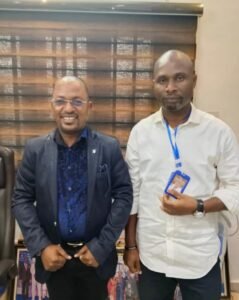
My name is Dr. Oluwasegun Alade Musa. I am a transport planner, a security consultant, an officer, a journalist by chance. I do many things, and I am also the managing director of Wide Scope International Logistics Limited.
Sir, can we know more about freight forwarding or cargo business?
Freight forwarding is a starting turf of a vehicle; it represents the starting turf of the economy, and is a motive fund behind the economy. Without an effective freight forwarding system or logistics system, you cannot have an effective or advancing economy; it propels the economy and advances the economy. Freight forwarding is the catalyst that enhances commerce, and freight forwarding is the industry that propels commerce, and buying, procuring, logistics, customs clearing, transport, to the final destination that is the holistic responsibility of freight forwarders.
How long have you been into this business?
For over 25 years.
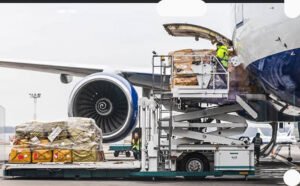 Can you tell us about the network and services involved in this job?
The service starts from the procurement to arranging documentation, transportation, to warehousing, to custom processing, delivery, and final delivery to final destination. We have different chain of agent within that supply chain. Sometimes we streamline it to make the process seamless with fewer agents involved.
What challenges are you facing in this job with the situation of the country on the foreign exchange rates?
The challenges include inconsistent government policies, lack of infrastructure to support the supply chain, inefficiency within the ports. We also face issues with multiple agencies,, infrastructural decay, as well as lack of information that can align into international best practices that we have in advanced countries. For instance in Nigeria here, we are supposed to have a kind of seamless operation that enhance good business, operations should be seamless and automated to make logistics processing faster. The bill can be automated to log yourself into the platform of customs, supply your data, when the shipment arrives, the goods coming provides by the time you input your data, your data will be attached whatever you uploaded in trader groups and once they compare there’s no infringement and anything suspicious they allow you to make duty for payment, once you make your payment completely they released it to you immediately and once they released to you, they give E-release to your phone and E-mail. Dispatching seen online to shipping
company to the terminal operators by the time you go to shipping company platform online, you fill out the delivery order, they also give you E-release as well. To terminal operator: by the time you approach terminal operators to pay for E-release from customs and the shipping company, they compare it with what you recruited. If it tallies and there’s no discrepancy in the manifold they have, they will also release it to you and allow you to make payment online, and they give you a terminal delivery order. Once you have the terminal delivery order, you transfer the statement through your phone or email to all these services, and you go to the port. When you get there, you will give them the terminal delivery order, and they will compare it with what they have in the system. Immediately, they will start putting your container inside your lorry and exit; nobody stops you, and nobody lays siege on the road. It should be as simple as that. He shouldn’t be any activity our trade is global thing they shouldn’t be any peculiarity if all the actors behave according to the rule.
 What’s your union or association doing in helping people who might have face difficulties in freight servicing in Nigeria and overseas?
We have what we can call awesome colleague support. When challenges arise, there are people you can call in the association that have a wide pool of knowledge. They give you information that will account for your needs so that you won’t have to pass through much trouble to get results. We also do capacity building; we train members, and hold seminars and workshops just to make sure we acute them to company. Change their policies to be on top of their game and also encourage them to seek training outside as a kind of self-development because this is the kind of industry that changes rapidly. Our people must also keep themselves up to date on development around the world that is moving every second. If you don’t move with the world, the world will move without you. You have to align yourself with international best practices so that you may be relevant in the industry.
What advice can you give to people who want to go into the freight services business?
First, they must have passion for it. It’s not where you go and say people are making money; you must be passion-driven for it, that’s when you can acquire some information and necessary knowledge that you can break even. If you don’t have the knowledge, whatever you make out of it will be temporary, and once the system changes, it will change without you. You move in to attain some knowledge that is relevant that will continue propelling and enhancing you in the scheme of whatever you do in the industry. Life is not about how much you have; it’s about the knowledge you have.
What advice can you give to our government on some of their policies that might be affecting your industry?
Before governing a country, leaders themselves must have the right knowledge and surround themselves with knowledgeable people who have practical business experience. Someone like me, I do business with people that have great business minds. They have to be right-thinking in knowledge, must have experience. Policymakers must evaluate the long-term effects of their decisions and work closely with the private sector. Policies should be designed to advance, not jeopardize, the economy. It shouldn’t be a one-party affair. There must be synergy between the private sector and the government. The government should not take ownership of knowledge; the government cannot think to have a monopoly on knowledge; knowledge must be shared; the people must be able to make contributions. It is when the private sector makes contributions that whatever policies the government takes can be meaningful and be able to take it and take ownership.
Thanks so much, sir, for sharing your thoughts, experience, and precious time with us.