
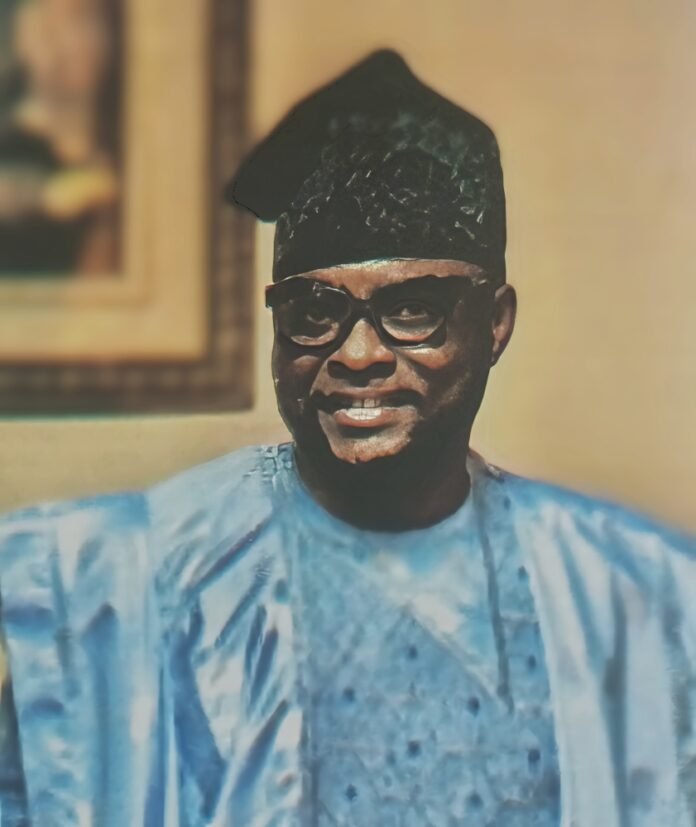
Welcome to Interviewers magazine, sir. Can you please introduce yourself to our readers?
Thank you. My name is Asiwaju Abiodun Salami. I am a Project Management Professional with background in accounting, economics, and commercial management. I can describe myself as an independent voice who will work with anyone to get things done and grow the middle class, regardless of the political affiliation. I have more than twenty-six years’ experience of financial management and human capital management experience within the financial services industry.
I am a successful, pragmatic leader who can forge bipartisan agreements on even the most contentious issues. My love for community building cannot be overemphasized. I am happily married and blessed with children.
Politics is described as a dirty game. Having participated in elections in Nigeria, how true is this assertion, especially in relation to Nigerian political parties business and elections?
To begin with, Politics is often perceived as a dirty game because it involves power struggles, manipulation, and sometimes unethical behavior. Politics is fundamentally about gaining and maintaining power. Whether it’s at the local, national, or international level. Individuals and groups vie for control over resources, policies, and decision-making processes. This pursuit of power can lead to cut-throat competition and a willingness to do whatever it takes to come out on top.
Nigerian Politicians and political entities often engage in corruption, where individuals may abuse their positions of power for personal gain, and also engage in manipulation and deception to sway public opinion by misinforming them, using propaganda technique. Their main goal is to shape perceptions and gain an advantage, even if it means distorting the truth or exploiting vulnerabilities. These undermine trust in government institutions and erodes public confidence in the political process.
Politics often becomes polarized, with entrenched partisan divides leading to gridlock, hostility, and lack of cooperation. Instead of focusing on the common good, politicians may prioritize scoring points against their opponents or catering to their base, even if it means sacrificing progress or compromising principles.
Despite these challenges, it is essential to remember that politics also plays a vital role in shaping societies, driving progress, and addressing pressing issues. While the game may be dirty at times, there are also individuals and movements striving to bring about positive change and uphold integrity in the political arena.
Are there differences between party politics in Nigeria and Canada?
The differences between the features of party politics in Nigeria and Canada include: The type of political system, the ideological spectrum of political parties, factors influencing voters’ behaviour, the rules and regulations governing political campaigning and campaign financing, role of the media in shaping public discourse and influencing political outcomes.
Canada practices parliamentary democracy, political parties compete for seats in the legislature, and the party or coalition with the majority forms the government. In contrast, Nigeria practices a presidential republic, parties compete for the presidency and control of the executive branch separately from the legislature.
Concerning the ideological spectrum, Nigeria political party system is a prototype on its own. Politicians change their ideology and ideals based on their personal interest, unlike in Canada, where ideology and ideals dictate the party line. In Canada, voters may be more inclined to support parties based on traditional affiliations or identity politics, while in Nigeria, they may prioritize policy, positions or candidate personalities. Canada have strict limits on campaign spending or public financing of elections, while Nigeria have more lenient regulations.
There are also differences in media ownership, freedom of the press and media consumption habits in the two countries. Parties may adapt their communication strategies accordingly, utilizing different platforms and messaging techniques to reach voters. In Nigeria, most of the media houses are owned by the major political big wigs and Godfathers in Nigeria. This is not the case in Canada; and that makes a lot of difference in the political landscape.
What will you do differently from what is currently obtainable if you become Oyo State Governor?
As a governor of Oyo State, I will continue to improve on all the ongoing structures and systems. I will also: (A) Define and communicate a clear vision for the state that reflects the aspirations and needs of its residents. (B) Promote Good Governance by ensuring transparency, accountability, and integrity in government operations. (C) Identify the most pressing issues facing the state, develop and implement comprehensive strategies to address them and improve quality of life for all residents. (D) Collaborate and Build Partnerships with state legislators, local government officials, community organizations, businesses, and other stakeholders to achieve common goals. (E) Implement policies to stimulate economic growth, a’tract investments, create jobs, support small business and entrepreneurs and industries that have the potential to drive innovation and prosperity, (F) Take proactive measures to address environmental challenges and promote sustainability. (G) Ensure Public Safety and Justice by prioritizing and upholding the rule of law. Invest in law enforcement, crime prevention, and rehabilitation programs. (H) Support Healthcare Access and Equity by promoting public health initiatives, and addressing disparities in healthcare outcomes. (I) Engage and Listen to the concerns of the Constituents and solicit feedback through town hall meetings, community events, social media, and other platforms. (J) Lead by Example: Demonstrate strong leadership, integrity, and ethical conduct in my role as governor. Lead by example and inspire others to uphold high standards of public service and citizenship.
By focusing on these priorities and working diligently to address the needs of Oyo state, I can make a lasting and positive difference in the lives of the residents and leave a legacy of progress and prosperity.
What are your experiences about party politics and elections in Nigeria, what better ways do you think they could be organized?
I have been engaging in partisan politics in Nigeria since 2006. I have gone through the electoral processes and contested elections in Oyo state. Nigeria’s party politics and elections have been characterized by a number of challenges, including issues related to transparency, accountability; integrity, inclusivity, lack of adequate knowledge about Nigerians’ rights and responsibilities as voters, thuggery and god-fatherism etc. My suggested improvements are:
Electoral bodies can strengthen oversight mechanisms, ensure transparency in voter registration and ballot counting, and enforce strict penalties for electoral malpractice. It is also important to leverage technology like electronic voting systems, biometric voter registration, and results transmission platforms to reduce manual errors, prevent fraud, and increase public trust in elections. However, it’s crucial to ensure the security and reliability of these technologies and address concerns about digital literacy and access.
Parties should strive to be more inclusive in their candidate selection processes and platforms, and electoral systems should be designed to provide fair representation for all segments of society.
It is also important to enhance civic education and voter awareness campaigns to empower citizens to participate more effectively in elections, make informed choices, and hold elected officials accountable.
Comprehensive electoral reforms in Nigeria to address systemic issues and strengthen democratic governance. This may include reforms related to campaign finance, party financing, electoral administration, and dispute resolution mechanisms. Engaging stakeholders in a transparent and inclusive reform process is essential for building consensus and legitimacy.
Civil society organizations play a vital role in promoting electoral integrity, monitoring electoral processes, and advocating for electoral reforms. Strengthening civil society engagement and collaboration with government institutions, political parties, and international partners can help build consensus around electoral reforms and ensure their effective implementation.
Eradicating Political Thugs and Godfathers will bring sanity to the whole process of electioneering.
A comprehensive and multi-stakeholder approach, encompassing legal reforms, institutional capacity building, civic education, and inclusive dialogue. By addressing the underlying challenges and strengthening democratic institutions, Nigeria can enhance the integrity and legitimacy of its electoral processes and promote democratic governance.